Maintenance · 7 min read
Mini digger maintenance: daily checks, greasing, tracks and winter care
A mini digger that is checked for five minutes each morning, greased every working day and stored properly in winter will give years of work with very little drama. Most breakdowns we hear about start with a missed check, a dry pin or stale fuel. This guide sets out the routine, what the warranty does and does not cover, and the things to check before you pick up the phone.
Published 24 Oct 2026
The daily walk-round
Do this before you start the engine, with the machine on level ground and the bucket down.
- Engine oil. Pull the dipstick, wipe it, check the level. Top up with the grade in the manual if it is low.
- Coolant. Check the level in the expansion tank on a cold engine. Never open a hot system.
- Hydraulic oil. Check the sight glass or dipstick with the boom and bucket in the position the manual specifies.
- Fuel. Fill up at the end of the day rather than the start, so there is less air in the tank overnight to condense.
- Leaks. Look under the machine and around every ram, hose end and the slew ring. A fresh drip is a message.
- Tracks. Check the tension and look for cuts, missing lugs and anything wedged between the track and the frame.
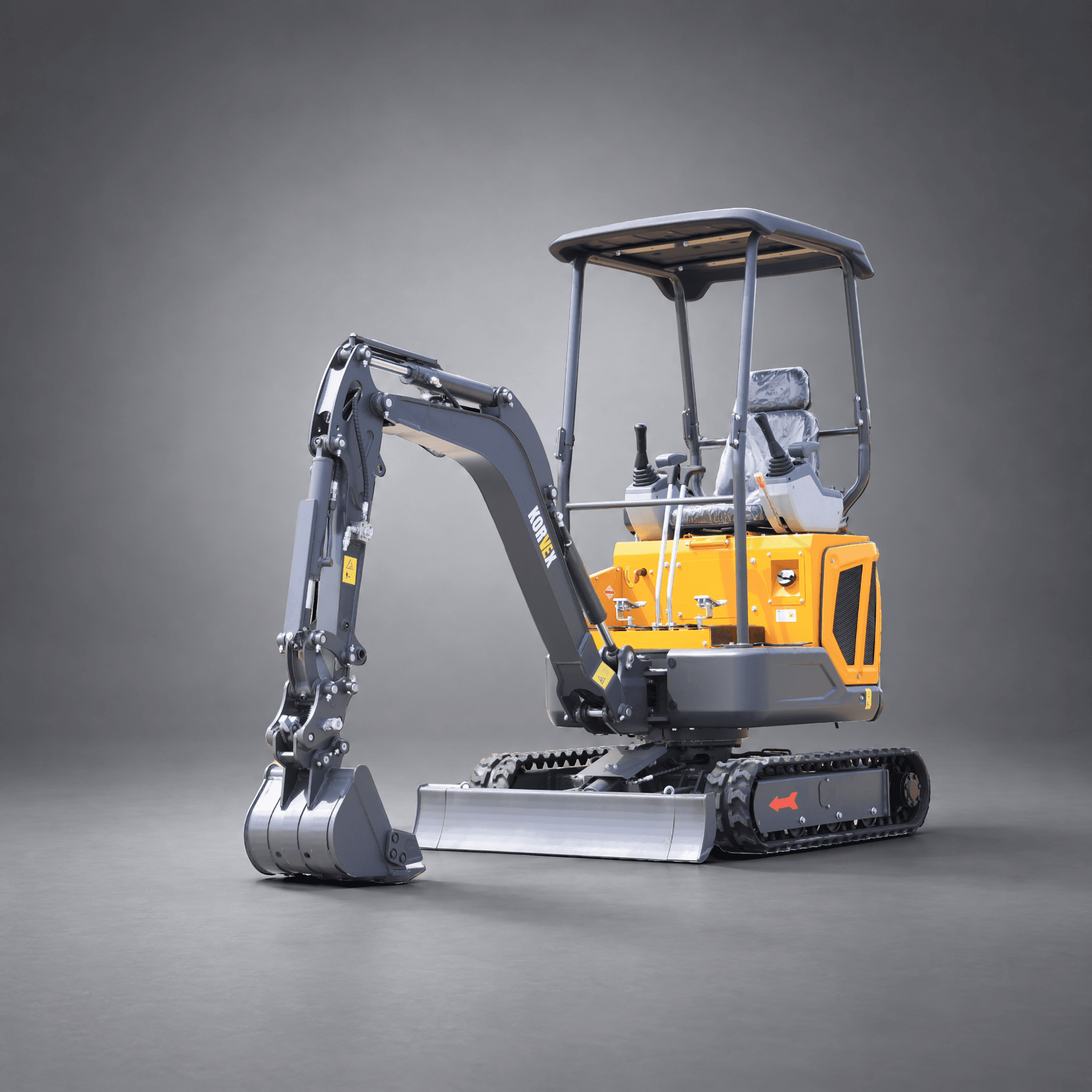
- Pins and bushes. Lift the bucket a few inches and feel for play at the boom, dipper and bucket pins.
- Hoses. Run your eye along every visible hose for chafing, bulges and weeping fittings.
- Controls and safety. Once running, work every function, check the safety lock lever, the horn, the lights and the seat belt.
Write anything unusual in a notebook kept with the machine. When you call us about it later, the notes help.
Greasing
Every pin, every day the machine works. The boom, dipper and bucket pins, the dozer blade pivots, the slew ring and the offset pivot all have grease points. Pump until you see clean grease push out at the joint, then wipe the excess away so it does not collect grit and turn into grinding paste.
Dry pins are the most common cause of play and of the clunk you feel when the bucket changes direction. Replacing pins and bushes is not covered by the warranty because they are wear items, so the grease gun is the cheapest insurance you will ever buy. Keep it on the machine.
Warm-up and shut-down
Let the engine idle for a few minutes before you work it, longer on a cold morning, so the oil is circulating and the hydraulic oil has warmed. Work the boom and bucket gently through their travel before you load them.
At the end of the day, idle for a minute or two before switching off. Park on level ground, lower the bucket and the dozer blade, set the safety lock, and take the key. The engines in every Korvex digger are Kubota three-cylinder diesels, and our Kubota engine guide covers why the warm-up matters to them.
Tracks and undercarriage
Rubber tracks are a wear item and how you drive decides how long they last.
- Tension. Check it against the sag figure in the manual. Too tight strains the rollers and idler; too loose and the track can jump off on a turn.
- Debris. Clean stones, clay and roots out of the undercarriage before they pack hard. Wet ground packs more than dry.
- Kerbs and edges. Do not climb kerbs or sharp edges at an angle. Go straight at them and slowly.
- Turning. Avoid spinning on the spot on hard ground, especially concrete. Make wider turns where you can.
- Sunlight. Rubber hardens and cracks with long exposure. Park in shade or cover the tracks when the machine is laid up.
The KVX-1.6 runs 180 mm tracks and the 1.8 and 2.0 run 230 mm tracks; the width changes the ground pressure, not the care routine.
Hoses and hydraulics
Hydraulic hoses live a hard life on a digger. Look for chafing where a hose touches metal, bulges near the fittings, and weeping at the crimps. Keep the routing as the machine was built, with clips in place, and do not let a hose rub on a track or the boom.
Check the hydraulic oil level daily and the condition of the oil at every service. Milky oil means water; dark, burnt-smelling oil means heat. Replace hydraulic filters on the schedule supplied with the machine and never run the machine with a hose that is weeping under pressure.
Filters, fluids and the service schedule
Engine oil and filter, fuel filter, air filter, hydraulic filter and coolant all have service points. Follow the schedule supplied with your machine for when each is due, because the intervals depend on the engine and on the work the machine does. Dusty work shortens the air filter interval. Short runs with a cold engine shorten the oil interval.
Keep the receipts and write the hours in the book. A service record is the first thing a buyer asks for and the first thing we ask for on a warranty call.
Wear items and the warranty
A Korvex warranty covers manufacturing defects in non-wearing parts for 12 months from the day of delivery. It is a parts warranty: we send the part from UK stock and you or your fitter install it.
Wear items are not covered because they are designed to wear. That includes bucket teeth and side cutters, pins and bushes, rubber tracks, sprockets and rollers, filters, belts and hoses that have chafed through. Damage from misuse, overloading, neglect or accident is also outside the warranty. If you are not sure which side of the line a fault falls, raise a claim anyway and we will tell you honestly.
Replacement wear parts for the range are held by our own UK parts team. The common ones are on the spares and parts page; for anything else call with the serial number.
Winter and storage
A machine that sits for weeks needs more care than one that works every day.
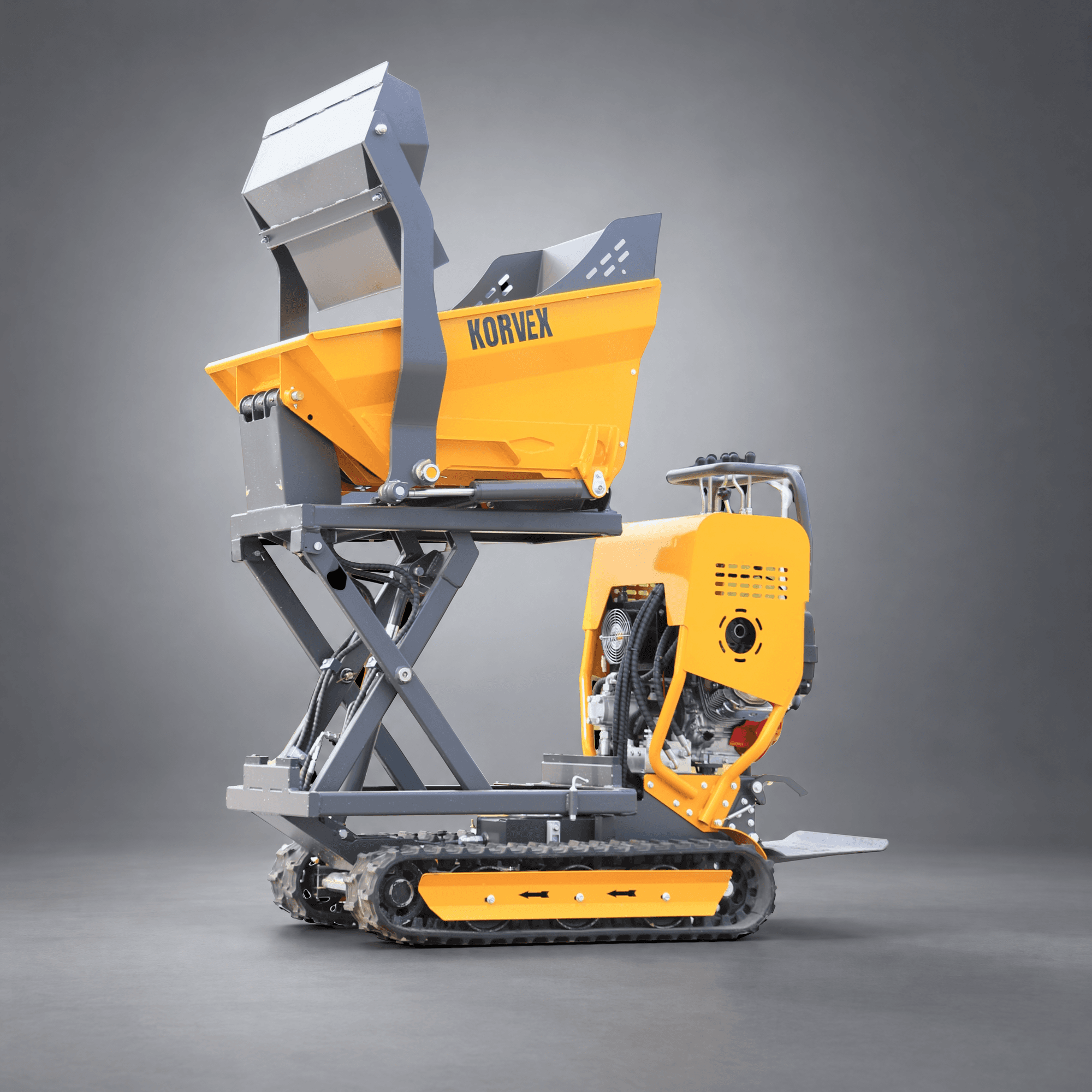
- Fuel. Fill the diesel tank to reduce condensation. For a petrol machine like the TD-0.5 tracked dumper, either run the carburettor dry or use a fuel stabiliser, because petrol goes stale over a winter.
- Battery. Disconnect it or put it on a maintenance charger. A flat battery in January is the most common call we get.
- Position. Park on level, firm ground with the bucket and blade down. Retract the rams as far as the position allows so the chrome is protected.
- Cover. Under a roof if you can, under a breathable cover if you cannot. Keep the tracks out of standing water and direct sun.
- Start it. Once a month, start the machine, let it reach temperature and work every function through its travel.
Check this first, then call us
Most calls we take in the first year are not warranty faults. They are one of the things in this table.
| Symptom | Check this first | Then |
|---|---|---|
| Will not start, no crank | Safety lock lever position, battery terminals, battery charge | Charge or replace the battery |
| Cranks but will not start | Fuel level, stale fuel after storage, fuel filter, air in the fuel line after running dry | Fresh fuel, new filter, bleed as per the manual |
| Starts then stops | Fuel filter, fuel pick-up, low engine oil shutdown | Fresh filter, check oil level |
| Hard to start in the cold | Battery condition, oil grade, glow plug time | Charge the battery, allow the full pre-heat |
| Slow or weak hydraulics | Hydraulic oil level, cold oil, hydraulic filter | Top up, warm up, change the filter |
| Jerky or noisy boom | Dry pins, air in a ram after a hose change | Grease, cycle the ram to full travel |
| Track coming off | Track tension, debris packed in the undercarriage | Clean out, retension to the manual |
| Smoke on start-up | Normal on a cold engine for a few seconds | Persistent smoke: call us |
If the fix is not in the table, call 01392 542040 with the serial number, the hours and what the machine is doing. For a fault that looks like a defect, use the warranty claim form with photos or a short video and we will come back to you with a reference.
Talk to us
Every model is at our showroom at Rosamondford Farm, near Exeter, by appointment, and we are happy to run through the daily checks and grease points on a machine on the yard. Call 01392 542040 and tell us the job you have in mind.
Common questions
How often should you grease a mini digger?
Every pin, every day the machine works. It takes a few minutes with a grease gun before you start and it is the single cheapest thing you can do for the life of the boom, dipper and bucket pins. Pump until you see clean grease at the joint, then wipe the excess so it does not collect grit.
What are the daily checks on a mini digger?
Engine oil, coolant and hydraulic oil levels, fuel, a look under the machine for drips, track tension, hoses for chafing or weeping, pins and bushes for play, and every control and safety function once the engine is running. Five minutes before you start saves hours later.
How tight should mini digger tracks be?
Tight enough that the track does not sag and jump off on a turn, loose enough that it is not straining the rollers and idler. The exact sag is in the manual supplied with the machine. Check it more often on wet or stony ground, because grit packs into the undercarriage and changes the tension.
What is not covered by a mini digger warranty?
Wear items. Bucket teeth, pins, bushes, tracks, filters and similar parts wear out with use and are not manufacturing defects. Damage from misuse, overloading, neglect or accident is also outside the warranty, as are labour and fitting. The Korvex warranty is parts only, with parts sent from UK stock.
Why won't my mini digger start?
Check the simple things first: the safety lock lever position, the battery and its terminals, fuel level and whether the fuel has been sitting over winter, the fuel filter, and the engine oil level. Cold weather makes all of these worse. If it still will not start, call us with the serial number and hours and we will talk it through.