Hire vs buy · 8 min read · in-depth guide
Is it worth buying a mini digger? Hire vs buy for anyone using one 20 days a year or more
Buying a mini digger is worth it when the machine will work roughly 20 to 40 days a year, you have somewhere to keep it, and you can move it or have it moved. Below that, hire is cheaper and far simpler. Trade users, smallholders and anyone whose jobs turn up at short notice usually cross the line without trying. A single garden project does not, and we would tell you to hire.
Published 24 Oct 2026
This guide puts real UK hire rates against real purchase prices, shows you a break-even method you can run for your own numbers, lists the costs of owning that nobody puts on the price tag, and ends with a decision table by days used per year.
What mini digger hire actually costs
The headline hire rate is the start of the bill, not the end of it. Here are published UK figures.
| Hire type | Published rate | Source |
|---|---|---|
| Micro digger, machine only | About £75 a day plus VAT | Chase Plant Hire |
| Mini digger, machine only | About £165 a day or £450 a week inc VAT | job-prices.co.uk |
| 1.5 tonne mini digger, weekly | Around £342 a week | National Tool Hire |
| Man and digger | £300 to £350 a day | Common trade rate |
On top of the headline rate, hire usually adds:
- Delivery and collection. Charged each way, and more for a remote postcode.
- Fuel. Machines go out full and come back full, or you pay the hire company's rate per litre.
- Damage waiver or insurance excess. A percentage on the hire or a fixed excess if something breaks.
- Attachments. A breaker or an auger is a separate line.
- Weekend and idle days. A machine delivered on Friday for a Monday start is on hire all weekend.
- Availability. HSS calls May the busiest month for hire. If your job lands in spring, the machine you want may not be free when you want it.
Add those up and the real weekly cost of a hire is often well above the headline figure. That is not a complaint about hire companies. It is what it costs to run a fleet that sits idle between customers.
The man-and-digger rate deserves its own line. At £300 to £350 a day you get an operator as well as a machine, which is the right answer if you have never driven one and the job is a single day. For anyone who will operate the machine themselves, it is the most expensive way to get a digger on site, and it is the rate that makes owning look cheapest of all.
The break-even method
Take the purchase price inc VAT, divide it by the weekly hire rate inc VAT, and you have the number of hire weeks the purchase price buys. If the machine will do more weeks than that over its working life with you, buying is cheaper before you count resale.
Worked example: a 1.6 tonne machine
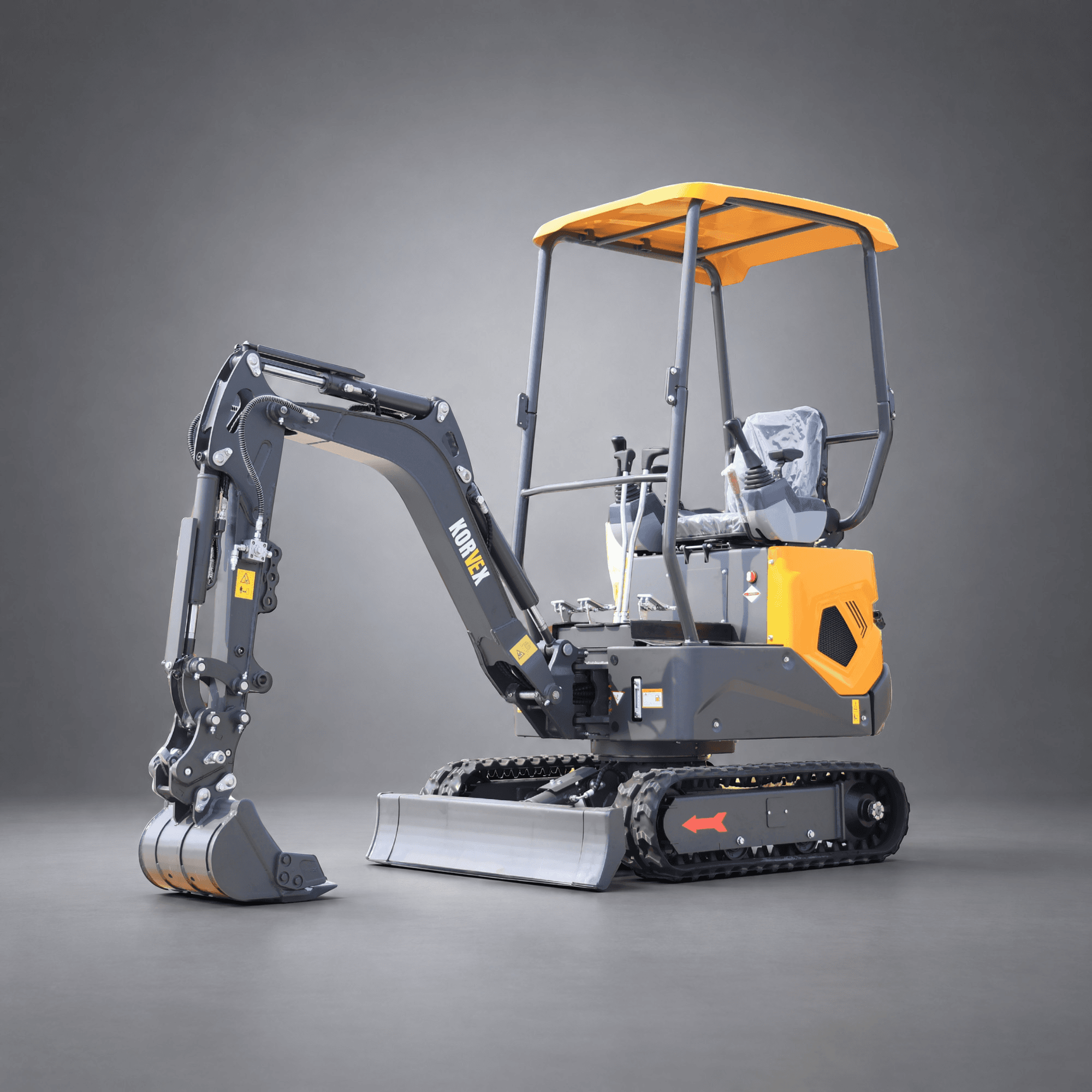
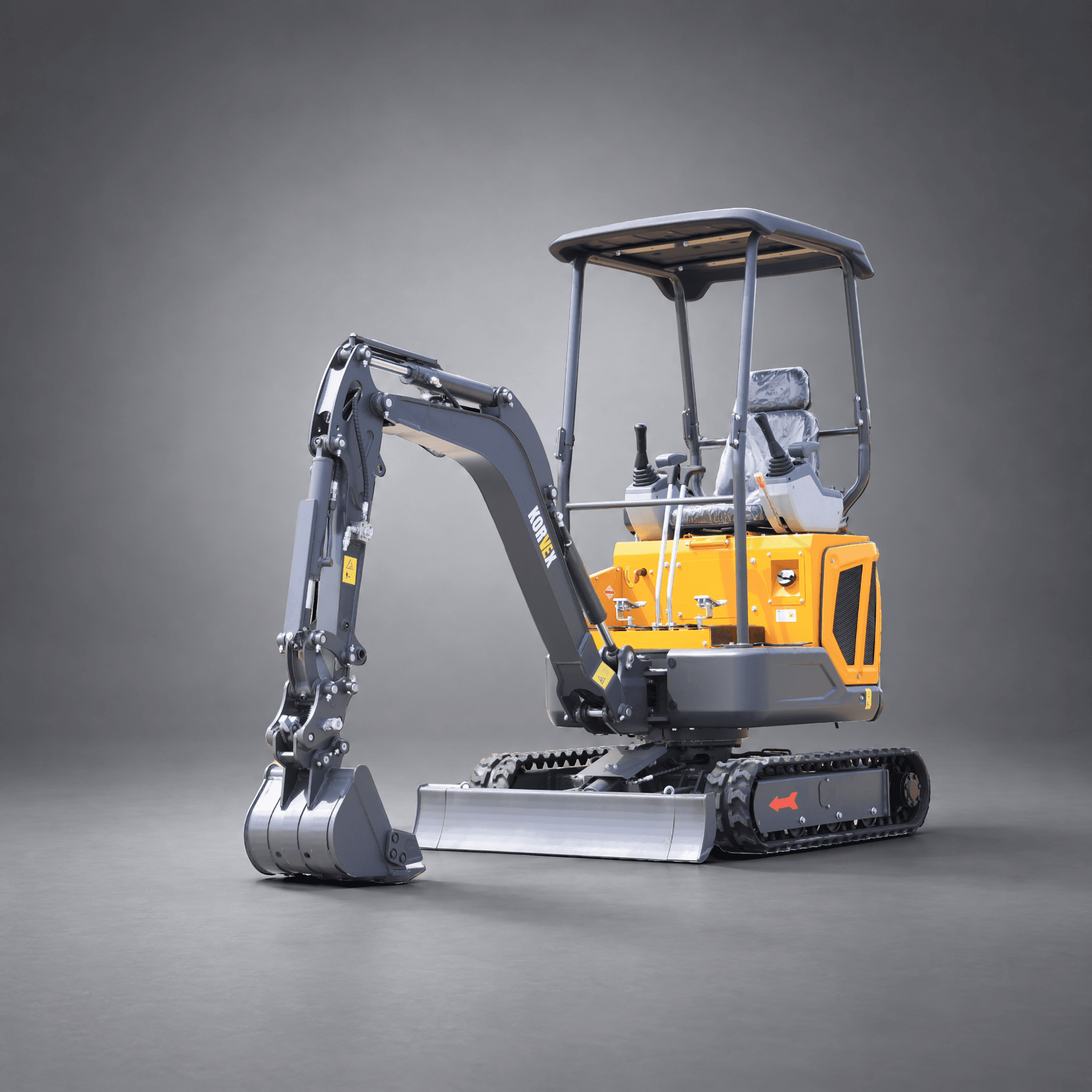
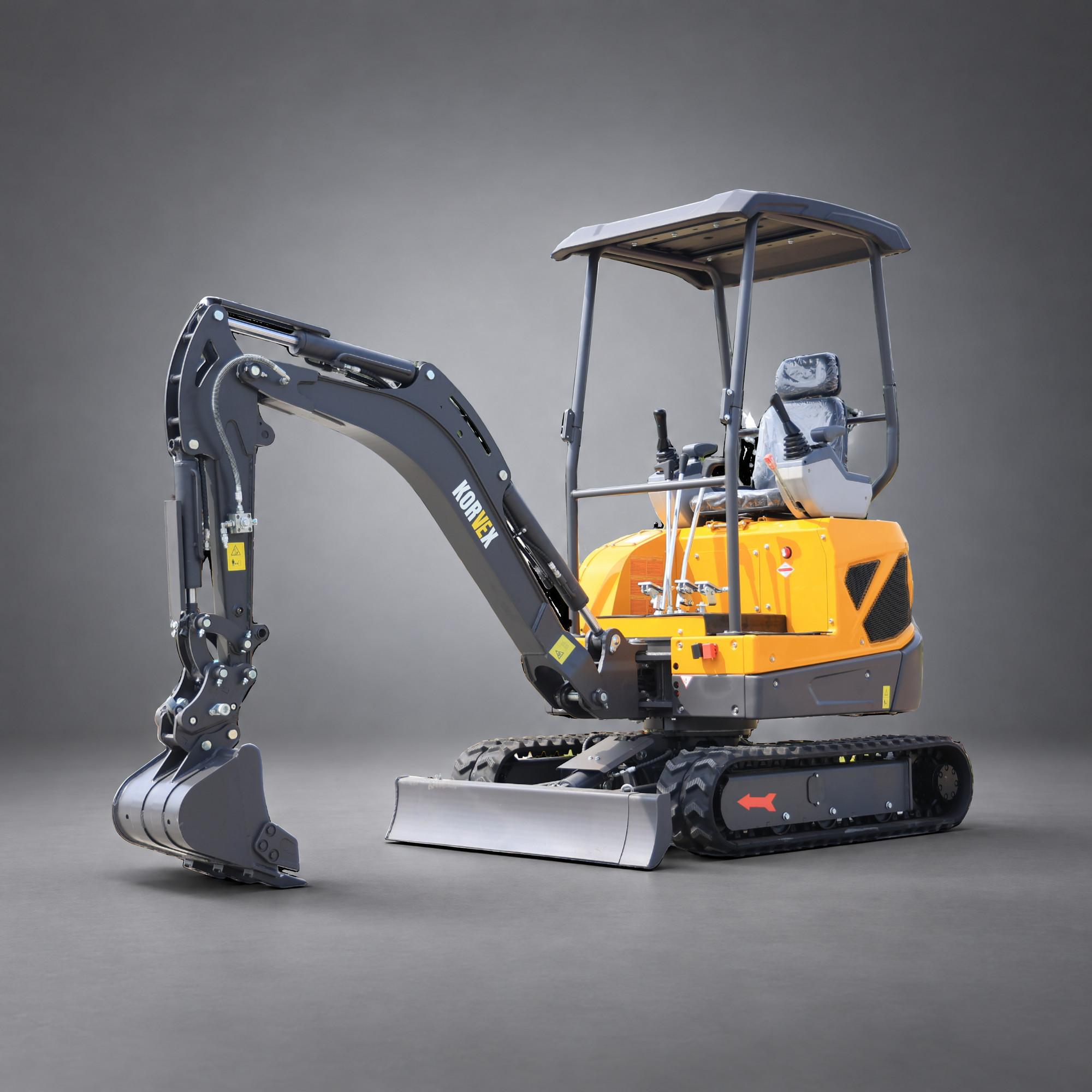
The Korvex KVX-1.6 is £10,495 ex VAT (£12,594 inc VAT) with three buckets in the box.
| Hire rate | Weeks the purchase price buys |
|---|---|
| £450 a week inc VAT (job-prices.co.uk) | 28 weeks |
| £342 a week (National Tool Hire) | 37 weeks |
So between 28 and 37 weeks of hire, ignoring every extra in the list above. For a landscaper or groundworker running the machine most weeks, that is well inside the first year. For a smallholder using it a fortnight each season, it is five to seven years, which is still inside the life of a well-kept machine but a slower return.
Worked example: a micro machine
The Korvex KVX-1.2 is £8,995 ex VAT (£10,794 inc VAT). Chase Plant Hire lists micro digger hire at about £75 a day plus VAT, which is £90 a day inc VAT. The purchase price buys 120 hire days. If you use the machine two days a week, that is a little over a year. If you use it 20 days a year, it is six years.
Run your own numbers
Replace the Korvex price with whatever machine you are considering, replace the hire rate with the quote you actually have, and add the hire extras you know you would pay. The method does not change. The answer usually does.
Buy it, use it, sell it after
A common approach on a big project, a self-build or a long landscaping job, is to buy a machine, use it for a year or two, then sell it. The maths then runs on the gap between what you paid and what you get back, not the full price.
CW Asset Finance, in its October 2026 guidance, quotes used 1.3 to 2.0 tonne diggers at £7,450 to £14,000 ex VAT (£8,940 to £16,800 inc VAT). That is a wide band, and where a particular machine lands inside it depends on hours, condition, service history and whether the paperwork is complete. A machine with low hours, a stamped service record and its Declaration of Conformity sells at the top. One with a hard life and no paperwork sells at the bottom, slowly.
Two honest cautions. First, plan on the lower end of the band and treat anything better as a bonus. Second, a machine only holds value if you look after it, which means greasing it, servicing it on schedule and keeping it under cover. Our guide to new versus used mini diggers covers what a buyer will look for when you come to sell.
Even on the cautious end, the sums are better than hire for a long project. A machine bought at £12,594 inc VAT and sold two years later at the low end of the used band has cost you a few thousand pounds to own, against a hire bill that would have been many times that for the same period.
The costs of owning nobody puts on the price tag
Buying a digger means owning a digger. These are the costs that come with it. None is large on a small machine, but you should go in with your eyes open.
- Fuel. The Kubota D722 in the KVX-1.2, 1.6 and 1.8 is an economical engine, but a working digger burns diesel every day it works.
- Servicing and filters. Follow the service schedule supplied with the machine. Engine oil, filters, hydraulic oil at the intervals given.
- Wear items. Bucket teeth, pins, bushes and rubber tracks wear with use. They are not covered by warranty on any make, so budget for them.
- Insurance. Theft cover for plant is worth having. Small plant is a target.
- Storage. Somewhere secure, ideally under cover. A machine left out in the weather loses value and gains problems.
- Transport. Either a plant trailer and a vehicle that can tow it, or a transporter each time it moves. See our guide to what size mini digger you need for what the different weight classes mean for moving the machine.
- Your time. Daily checks and greasing take ten minutes. Skipping them costs far more than ten minutes.
Against those, owning gives you things hire never can. The machine is on the yard the day the job comes in. You know its history. You are not paying for someone else's idle fleet.
Hire or buy: a decision table
| Days used per year | Our honest advice |
|---|---|
| Under 10 | Hire. Buying ties up money in a machine that spends most of the year parked. |
| 10 to 20 | Hire, unless the jobs come at short notice and hire availability is a problem for you. |
| 20 to 40 | Buy if you have storage and transport. The break-even arrives inside the life of the machine and you gain the convenience. |
| 40 and over | Buy. You are paying hire rates for a machine you effectively own already. |
| A single long project | Buy and sell after, with the cautions above. |
Who should hire
- Anyone with one job and no second job in sight.
- Anyone with nowhere secure to keep a machine.
- Anyone who cannot tow it or pay to move it.
- Anyone who needs a size they will never need again, such as a 3 tonne machine for one deep drainage run.
Hire is not the wrong answer. It is often the right one, and we say so.
Who should buy
- Landscapers, groundworkers and fencing contractors. A digger on the yard lets you price jobs others turn down and start when the client says yes. The hire margin on each job goes to you instead.
- Smallholders and farmers. Ditches, drainage, fence posts, tree work, a pad for a shed. The jobs never stop and none of them justifies a hire on its own. Together they do.
- Self-builders and renovators. Footings, services, drainage, landscaping and the garden at the end. A project that runs over a year is a project that pays for a machine, especially with resale at the end.
- Anyone whose work is weather-dependent. A hired machine sits on hire while it rains. An owned one waits for free.
Which machine, if you buy
For most trade and smallholding use the KVX-1.6 is the machine we would point you at first: 1,780 mm dig depth, 1,100 mm wide, Kubota D722 engine, £10,495 ex VAT (£12,594 inc VAT). If access is tight the KVX-1.2 at 937 mm wide gets through a metre gate. If the work is deeper or heavier, the KVX-1.8 digs to 2,030 mm. Every machine comes with three buckets, a pre-delivery inspection at our Exeter depot, a UKCA plate and a 12-month parts warranty backed by UK stock. Our mini digger prices guide sets every model against the rest of the market.
If spreading the cost would make the difference, ask us. We do not run finance through the website, but we will talk through what we can do on the confirmation call.
Talk to us
Every model is at our showroom at Rosamondford Farm, Perkin's Village, Exeter, EX5 2JG, by appointment. Call 01392 542040 with the jobs you have in mind and how many days a year you think the machine would work, and we will tell you straight whether buying makes sense for you.
Common questions
Is it worth buying a mini digger?
It is worth it once the machine works somewhere between 20 and 40 days a year and you have somewhere to keep it and a way to move it. Below that, hire is cheaper and simpler. Trade users, smallholders and anyone whose jobs arrive at short notice usually cross that line without noticing. A one-off garden project does not.
How much does it cost to hire a mini digger per day?
Published UK rates run from about £75 a day plus VAT for a micro digger (Chase Plant Hire) to around £165 a day or £450 a week inc VAT for a mini digger (job-prices.co.uk). National Tool Hire lists a 1.5 tonne machine at about £342 a week. Delivery, collection, fuel, insurance excess and a damage waiver are usually on top.
How many weeks of hire equals buying a mini digger?
Divide the purchase price by the weekly hire rate. A Korvex KVX-1.6 at £12,594 inc VAT against hire at £450 a week inc VAT is 28 weeks. Against £342 a week it is 37 weeks. If the machine will do that much work over its life with you, buying wins before you count resale.
Can I buy a mini digger and sell it after the job?
Yes, and it is a common approach for a big self-build or landscaping project. CW Asset Finance quotes used 1.3 to 2.0 tonne diggers at £7,450 to £14,000 ex VAT in October 2026, but where a machine lands in that band depends on hours, condition and paperwork. Plan on the lower end and treat anything better as a bonus.
What are the running costs of owning a mini digger?
Fuel, servicing and filters, wear items like teeth and tracks, insurance, somewhere secure to store it and a way to move it between jobs. None of these is large on a small machine, but together they are the difference between the headline price and the real cost. A machine that sits unused still needs storage and insurance.
Should a landscaper hire or buy a mini digger?
Buy, in most cases. A landscaper with a digger on the yard can price jobs the hire-dependent competitor turns down, start on the day the client says yes, and keep the hire margin. The break-even against weekly hire comes in well under a year of normal trade use.