Size · 9 min read · in-depth guide
What size mini digger do I need? Micro, 1.5, 2 and 3 tonne compared
Most people need a smaller digger than they think for the job and a bigger one than they think for the access. For gardens and patios with a single gate, a micro under 1,000 mm wide. For footings, drainage and general groundwork, a 1.5 to 1.8 tonne machine. For anything past two metres deep or a working site, 2 tonnes and up. This guide gives you the widths, depths and weights so you can measure once and buy once.
Published 24 Oct 2026
We sell four sizes of digger and one tracked dumper, and we say below which one is not the right machine for a given job. Every figure here is from the machine specification pages.
Start with the gate, not the job
The most common mistake we see is a buyer choosing a machine on dig depth and then finding it will not get into the garden. On most domestic jobs, access decides the machine.
Measure the narrowest point between the road and the hole. That is usually a side passage, a gate, a doorway or the gap between a wall and a garage. Measure at ground level and at hip height, because walls lean and gateposts carry hinges. Then compare the number with the table.
| Opening | Will it fit? |
|---|---|
| 900 mm (a standard single garden gate) | TD-0.5 tracked dumper at 870 mm. No Korvex digger. |
| 1,000 mm | KVX-1.2 at 937 mm, with about 30 mm each side. KVX-2.0 with its tracks retracted to 1,000 mm, with no margin. |
| 1,100 mm | KVX-1.2 comfortably. KVX-2.0 retracted. |
| 1,200 mm (a typical double gate) | Every machine in the range, including the KVX-1.6 and KVX-1.8 at 1,100 mm. |
| 1,250 mm and above | Everything, with the KVX-2.0 tracks fully extended for stability. |
Two cautions. The dozer blade on a mini digger is often as wide as or wider than the tracks, so check the blade width on the spec sheet for the machine you are looking at. And a machine that fits the gate with 30 mm to spare still needs a straight run at it. A gate at the end of a narrow passage with a turn in it is a different problem from a gate in a straight fence.
Mini digger sizes compared
Here is the Korvex range side by side. Width is the figure that decides access. Dig depth and reach decide what the machine can do once it is in.
| Model | Weight | Width | Dig depth | Reach at ground | Dump height | Price |
|---|---|---|---|---|---|---|
| KVX-1.2 | 1,050 kg | 937 mm | 1,670 mm | 3,080 mm | 2,020 mm | £8,995 ex VAT (£10,794 inc VAT) |
| KVX-1.6 | 1,600 kg | 1,100 mm | 1,780 mm | 3,420 mm | 2,030 mm | £10,495 ex VAT (£12,594 inc VAT) |
| KVX-1.8 | 1,800 kg | 1,100 mm | 2,030 mm | 3,580 mm | 2,210 mm | £12,995 ex VAT (£15,594 inc VAT) |
| KVX-2.0 | 2,000 kg | 1,000 to 1,250 mm | 2,290 mm | 3,735 mm | 2,440 mm | £14,495 ex VAT (£17,394 inc VAT) |
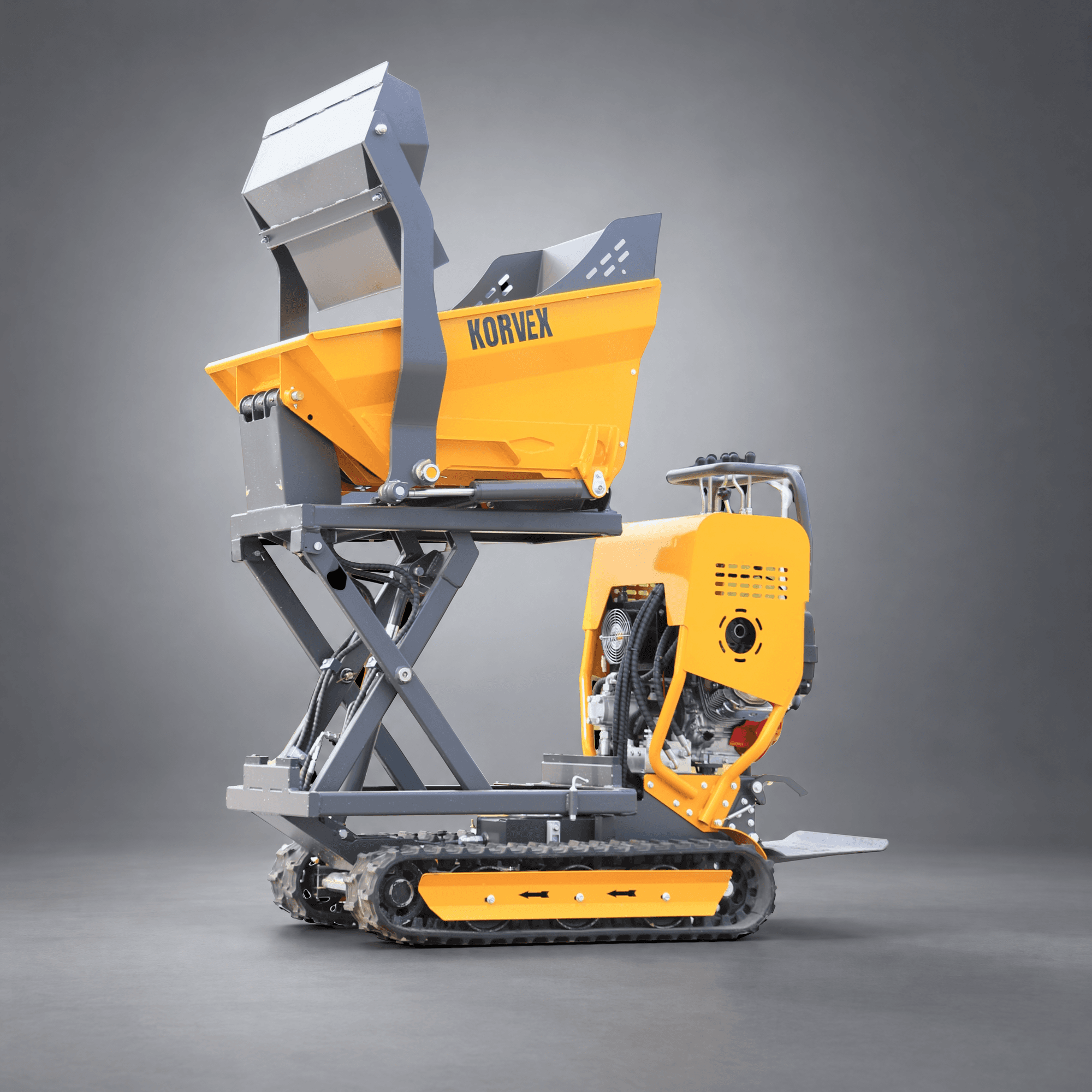
| TD-0.5 dumper | 520 kg (500 kg payload) | 870 mm | n/a | n/a | tips to 1,350 mm | £4,995 ex VAT (£5,994 inc VAT) |
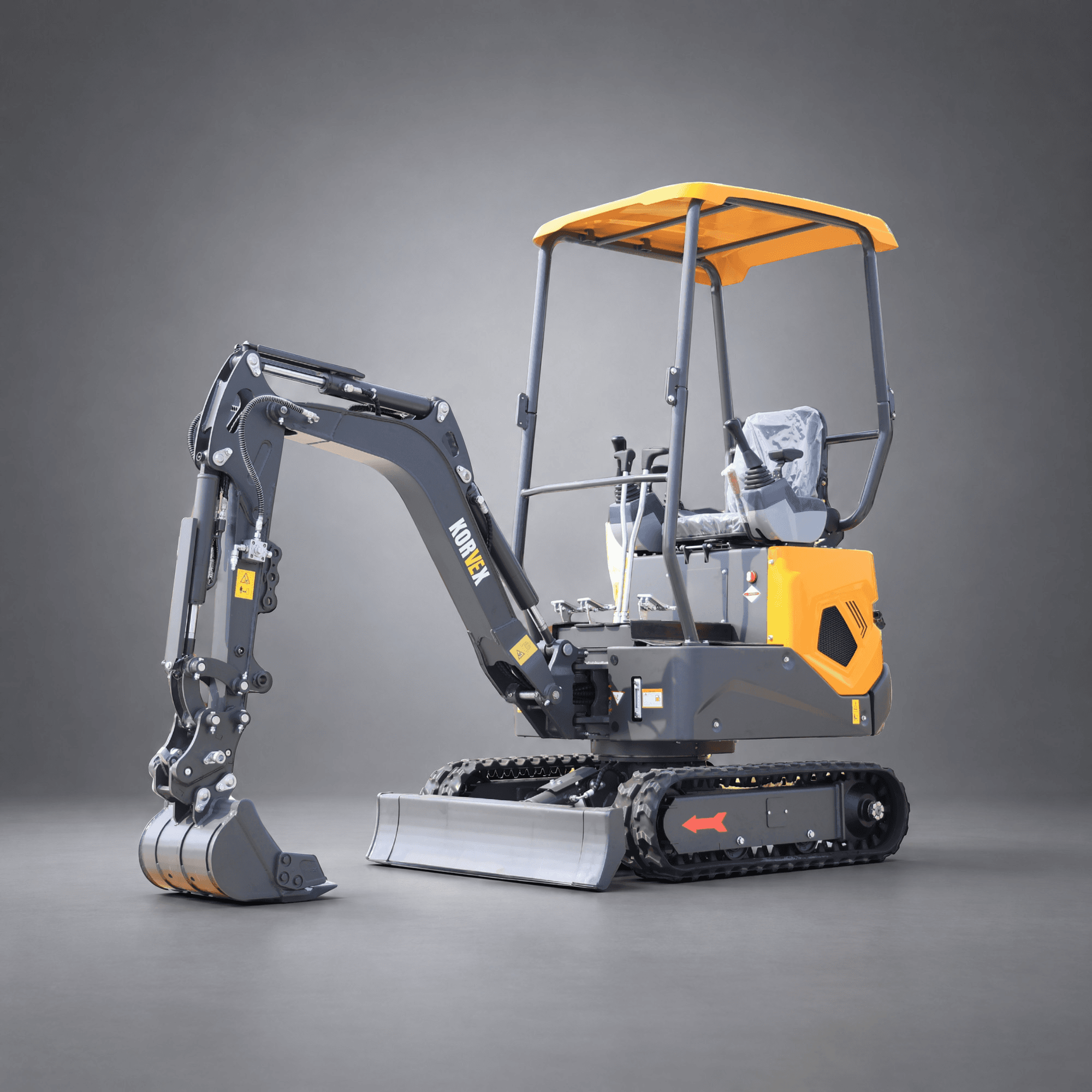
All four diggers have a dozer blade, an offset boom, pilot joystick controls and rubber tracks. The 1.2 and 1.6 run 180 mm tracks; the 1.8 and 2.0 run 230 mm tracks, which spread the weight better on soft ground. The KVX-2.0 has hydraulically expanding tracks, so it narrows to 1,000 mm to get through an opening and widens to 1,250 mm to dig.
Micro class: up to 1.2 tonne
The KVX-1.2 exists for one reason: access. At 937 mm it goes where a 1.5 tonne machine cannot, through a single gate, down a side passage, into a back garden. It digs to 1,670 mm, which is deeper than most people expect from a machine this size, and it reaches 3,080 mm. The trade-off is pace. A narrower bucket and a lighter machine move less soil per cycle.
1.5 to 1.6 tonne class
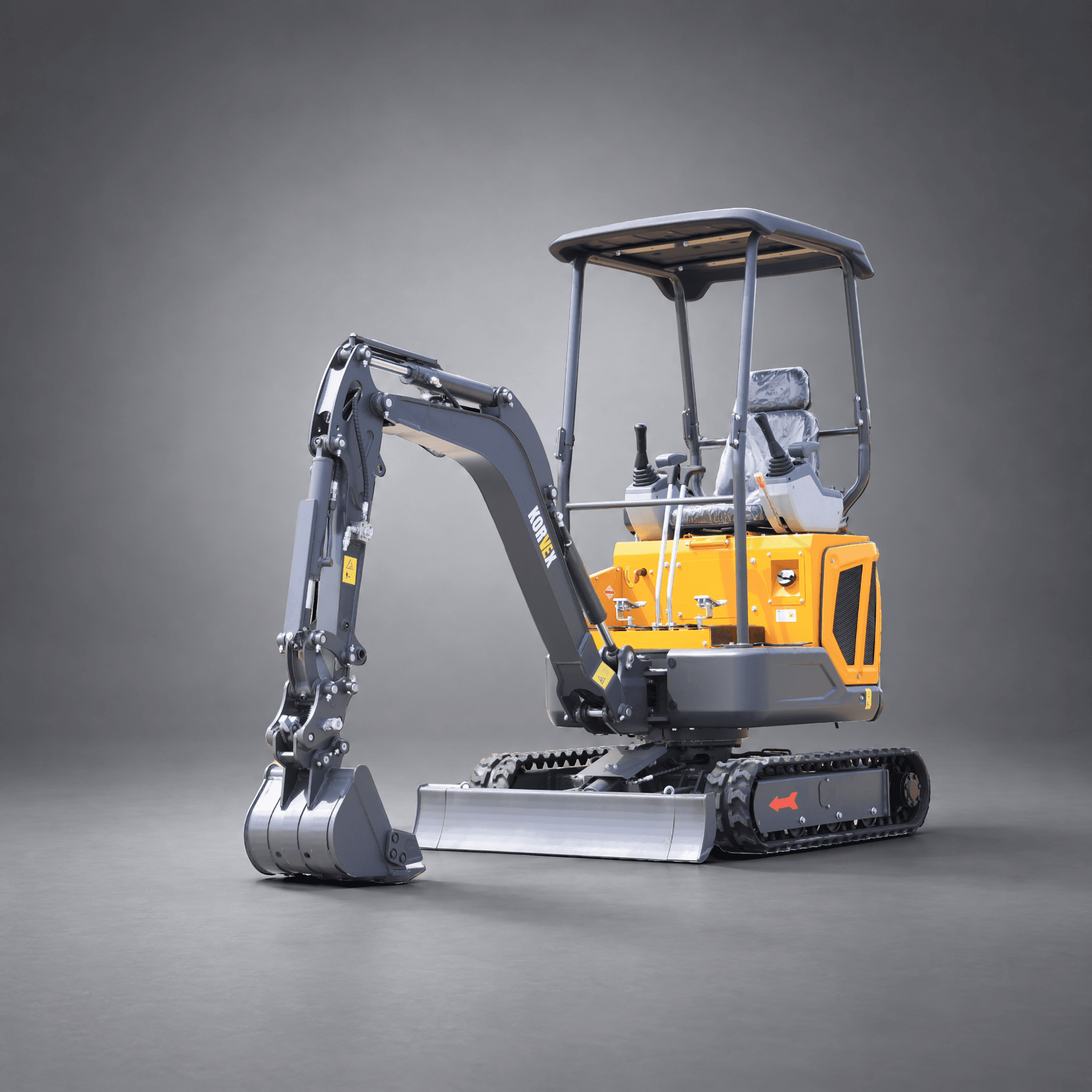
The KVX-1.6 is our best seller because it is the size most jobs want. At 1,100 mm it goes through a double gate or a standard driveway, digs to 1,780 mm, which covers domestic footings, drainage and soakaways, and reaches 3,420 mm so you are not tracking back and forth as much. At 1,600 kg it is light enough to tow behind a lot of pickups and vans on a plant trailer, which matters if the machine moves between jobs.
1.8 tonne class
The KVX-1.8 is the same width as the 1.6 but digs 250 mm deeper (2,030 mm) and reaches 160 mm further. The wider 230 mm tracks give it a steadier footing on wet ground. If you regularly dig past 1.8 metres, do land drainage, or work on heavy clay, this is the step up.
2 tonne class
The KVX-2.0 is the machine for anyone running a digger most days. The Kubota D902 engine, the piston pump at 205 bar and the 2,290 mm dig depth make it a working tool rather than a garden tool. The expanding tracks are the clever bit: narrow to get in, wide to dig. It weighs 2,000 kg, which is still towable on a 3,500 kg plant trailer with a suitable vehicle, but the whole outfit needs more thought. See our guide on towing a mini digger.
3 tonne class and above
We do not sell one, and for some jobs that is the honest answer. A 3 tonne machine digs deeper, lifts more and shifts spoil faster, at the cost of being 1,500 mm or more wide and needing a bigger trailer or a transporter. For a one-off deep dig, a long drainage run on open ground, or a demolition job with heavy material, hiring a 3 tonne machine for a week can beat owning a 2 tonne one.
How deep can a mini digger dig?
Dig depth is the headline figure on every spec sheet, and it is measured with the boom and dipper fully extended straight down. In practice you will not use the last 100 mm very often, because the machine is at full stretch and the bucket cannot curl properly at the bottom of the hole.
| Job | Typical depth | Smallest Korvex machine that does it comfortably |
|---|---|---|
| Patio or path dig-out | 200 to 400 mm | KVX-1.2 |
| Garden wall footing | 450 to 600 mm | KVX-1.2 |
| Shed or garage base | 150 to 300 mm, wider area | KVX-1.2, faster on a KVX-1.6 |
| Domestic drainage and soakaway | 600 to 1,200 mm | KVX-1.6 |
| Extension footings | 1,000 mm, deeper on clay or near trees | KVX-1.6, KVX-1.8 if building control asks for more |
| Land drainage | 900 to 1,500 mm, long runs | KVX-1.8 |
| Deep service trench or pond | 1,800 mm and beyond | KVX-2.0 |
If you are digging footings, remember that building control sets the depth, not the digger. On shrinkable clay or near trees they may ask for more than a metre, and that is where the 1.6's 1,780 mm starts to feel tight and the 1.8's 2,030 mm gives you room.
Reach and dump height
Two numbers that matter more than most buyers expect. Reach at ground is how far from the tracks the bucket can work; longer reach means fewer moves and a cleaner trench edge. Dump height is how high the bucket lifts, which sets whether you can load a trailer, a dumper or a skip without building a ramp.
The TD-0.5 tracked dumper has a skip height low enough for every digger in the range to load it, and its high-tip lifts the load to 1,350 mm, which clears the side of most trailers and skips. A digger and a dumper working together is how most one-person groundwork gets done.
Weight and transport
The weight of the machine decides how it gets to the job, and that can decide the size as much as the gate does.
| Model | Weight | How it usually travels |
|---|---|---|
| TD-0.5 | 520 kg | Small trailer, van with a ramp, or pallet delivery |
| KVX-1.2 | 1,050 kg | Plant trailer behind a car, pickup or van |
| KVX-1.6 | 1,600 kg | Plant trailer behind a pickup or van |
| KVX-1.8 | 1,800 kg | Plant trailer behind a pickup or van |
| KVX-2.0 | 2,000 kg | 3,500 kg plant trailer behind a suitable pickup, or transporter |
Add the trailer's own weight to the machine, and check the tow vehicle's limit and the gross train weight before you commit. The rules, and what the common plant trailers are plated at, are in can you tow a mini digger. If you will not tow it, we deliver: within 25 miles of Exeter with our own team, further afield on a plant transporter, priced by postcode at checkout.
Job by job: which size
Patio, path or driveway
Access is everything, depth is nothing. If a 1.6 fits, use it, because the wider bucket shifts more per pass. If the only route is a single gate or a side passage, the KVX-1.2. Pair either with the TD-0.5 to get spoil out to a skip at the front.
Footings for a wall, shed or extension
A KVX-1.2 will do garden-wall footings. For an extension, the KVX-1.6 is the sensible minimum, and the KVX-1.8 if the ground is clay or the site has trees nearby.
Drainage and soakaways
The KVX-1.6 covers domestic runs. For land drainage across a field, the KVX-1.8's extra depth and wider tracks earn their keep.
Fencing and post holes
Any of the diggers with an auger. The KVX-1.2 or KVX-1.6 is plenty, and the smaller machine gets between existing posts more easily. The auger is £359 ex VAT (£430.80 inc VAT) on our accessories page.
Light demolition and breaking out
A hydraulic breaker on the KVX-1.6 or above. The 1.2 will run a breaker, but the extra weight of the 1.6 and 1.8 holds the machine steady against it.
Smallholding and farm work
The KVX-1.8 or KVX-2.0 for ditching, drainage and clearing, with the tracked dumper for carrying. If the ground is wet most of the year, the 230 mm tracks on the 1.8 and 2.0 matter more than the extra depth.
When hire is the better answer
If the job is one deep dig and then nothing for a year, hire the biggest machine that fits and give it back. If you need a 3 tonne machine for a week and a 1.6 tonne machine for the rest of the year, buy the 1.6 and hire the 3 tonne. Our price guide has current hire rates and the break-even against buying.
Talk to us
Every machine in this guide is at our showroom at Rosamondford Farm, Perkin's Village, Exeter, EX5 2JG, by appointment. Bring the gate measurement and a description of the job, or call 01392 542040 and tell us what you are digging. We will tell you which size does it, and which one is more than you need.
Common questions
What size mini digger fits through a garden gate?
Measure the gate first. A 900 mm gate takes a tracked dumper like the 870 mm TD-0.5 but no Korvex digger. A 1,000 mm opening takes the 937 mm KVX-1.2 with about 30 mm each side. A 1,200 mm opening takes every machine in our range, including the 1,100 mm KVX-1.6 and KVX-1.8. Check the dozer blade as well as the tracks, because the blade is often the widest point.
How deep can a 1.5 ton mini digger dig?
Around 1.7 to 1.8 metres. The Korvex KVX-1.6 digs to 1,780 mm, which covers standard domestic footings, drainage runs and soakaways. For anything past 2 metres you want the 1.8 tonne class (KVX-1.8 at 2,030 mm) or the 2 tonne class (KVX-2.0 at 2,290 mm).
What is classed as a mini digger?
In UK trade use a mini digger or mini excavator is a tracked 360 degree excavator from about 1 tonne up to roughly 6 tonnes. Under 1 tonne is usually called a micro digger. From 6 to 10 tonnes is a midi. The CPCS A58 card covers all 360 excavators below 10 tonnes, which is why the classes get grouped together on site.
Is a 1 ton digger big enough for footings?
For a garden wall, a shed base or a small extension on firm ground, a 1 tonne class machine like the KVX-1.2 (dig depth 1,670 mm) will do it, slowly. For a full extension, a garage base or anything where building control may ask for deeper footings on clay or near trees, step up to the 1.6 or 1.8 tonne machine. The extra reach and breakout save a day or more.
What size digger do I need for a patio?
A patio dig-out is shallow, typically a few hundred millimetres of soil and sub-base, so access decides it rather than depth. If you can get a 1.6 tonne machine in, use it, because the wider bucket and longer reach halve the time. If the only way in is a side passage or a single gate, the 937 mm KVX-1.2, or a tracked dumper to barrow the spoil out, is the answer.
1.5 ton or 1.8 ton digger, which should I buy?
They are the same width (1,100 mm on the Korvex machines) so access does not separate them. The 1.8 tonne class digs about 250 mm deeper and reaches about 160 mm further, with wider 230 mm tracks for softer ground. If you regularly dig past 1.8 metres or work on wet ground, buy the 1.8. If most jobs are under that, the 1.6 is lighter to tow and £3,000 cheaper.